What Are the Best Fabrics for Men's Suits in Dubai's Hot Climate?

Best Fabrics For Summer
Best Fabrics For Summer
08/10/2026
Table of contents
No items found. Apply ArticleOverride to your article frame and/or IntroOverride → ToCItem to external blocks.
Introduction
Dubai does not offer a gentle summer. Temperatures regularly cross 45°C, humidity sits thick in the air for months, and most men move between blasting air conditioning indoors and dense heat outdoors several times a day. A suit built for London or New York simply cannot keep up with these conditions.
Choosing the right fabric for a suit in Dubai is not about following fashion trends. It is about understanding how different materials behave under heat and humidity, so your suit works with the climate instead of against it.
This guide breaks down exactly what to look for, and what to avoid, when building a suit for Dubai's weather.
What Makes a Fabric Work in Dubai's Heat
Before comparing specific fabrics, it helps to understand what actually matters in hot, humid conditions. Three properties decide whether a suit will hold up through a Dubai summer.
Breathability determines how easily air moves through the weave. A tighter weave traps heat against the body, while an open, looser weave lets air circulate and heat escape.
Moisture-wicking determines how the fabric handles sweat. Natural fibres like wool and linen absorb moisture and release it gradually, keeping the fabric from feeling damp against the skin. Synthetic fabrics tend to trap moisture instead, which is why heavy polyester blends feel unbearable in Dubai's humidity.
Weight and construction decide how the suit drapes and how much heat it retains. A heavier weight, thick lining, or fully structured jacket adds warmth that Dubai's climate simply does not call for.
Best Fabrics for Dubai's Climate
Lightweight Wool
Wool has a reputation for being a cold-weather fabric, but a well-chosen lightweight wool performs surprisingly well in heat.
High-quality wool is naturally breathable and regulates temperature, keeping you comfortable indoors under air conditioning and outdoors in the sun.
Wool also holds its shape and structure far better than most alternatives, which matters for a suit that needs to look sharp through long client meetings or full-day events.
Linen
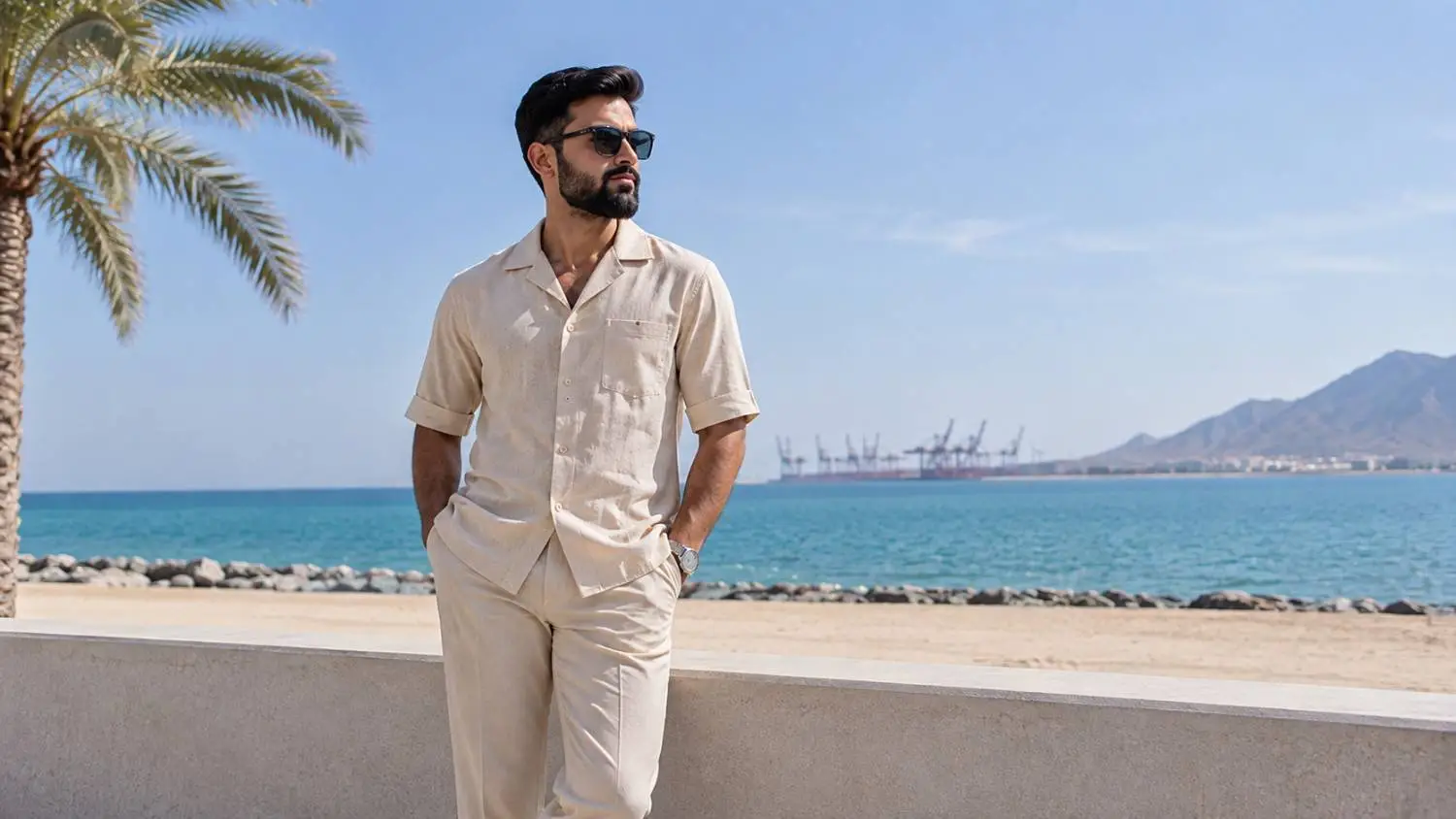
Linen is the classic choice for Dubai summers, and for good reason. Its open weave allows maximum airflow, and it releases moisture quickly, which keeps the fabric feeling dry rather than damp.
Linen does wrinkle more easily than other fabrics, but this is part of its character rather than a flaw. A slightly creased linen suit still reads as relaxed and refined, particularly for daytime events, outdoor weddings, or smart-casual settings.
Cotton
Cotton offers a dependable middle ground between structure and breathability. It absorbs moisture well, feels soft against the skin, and holds a crisper shape than linen, which makes it a strong choice for business settings where a slightly more formal silhouette is needed.
Cotton-Linen and Linen-Wool Blends
Blended fabrics combine the strengths of each material while minimizing their individual drawbacks. A cotton-linen blend keeps the breathability of linen while reducing how much it creases.
A linen-wool blend adds structure and durability while retaining much of linen's natural airflow. These blends are increasingly popular in Dubai because they offer a practical balance for men who need a suit that holds up through long, active days.
At Santoba, our fabric range includes wool, linen, cotton, and wrinkle-resistant blended options, giving clients the flexibility to choose based on how and where the suit will actually be worn.
Fabrics to Avoid in Dubai's Heat
Not every fabric that looks good on a hanger performs well in Dubai's conditions. Heavy wool, thick tweed, and dense polyester blends trap heat and moisture against the body, which leads to discomfort within minutes of stepping outside. These fabrics belong in cooler climates or winter wardrobes, not in a Dubai summer rotation.
Fully synthetic fabrics in particular tend to feel clammy in humidity since they do not absorb or release moisture the way natural fibres do. If comfort is the goal, natural fibres and natural fibre blends should always be the starting point.
Construction Matters as Much as Fabric

Fabric choice is only half the equation. How a suit is constructed plays an equally significant role in how it performs in heat.
Half-lined and unlined jackets reduce the layers between your body and the outside air, which significantly improves airflow. A fully lined jacket, no matter how breathable the outer fabric, will always trap more heat than a half-lined or unlined equivalent.
Unstructured jackets use lighter internal construction with less padding and stiffening, resulting in a softer, more relaxed silhouette that moves with the body rather than holding a rigid shape. This construction style has become increasingly popular for Dubai's business casual settings, where comfort and professionalism need to coexist.
Open weave and breathable interlinings in the chest and shoulder areas further support airflow without compromising the structure needed for a sharp, tailored look.
This is exactly why working with an experienced tailor matters. A skilled tailor does not just recommend a fabric, they adjust the entire construction of the suit to suit Dubai's specific demands, something a ready-made suit simply cannot offer.
Choosing the Right Fabric for Your Setting
For corporate tailoring in Dubai, cotton or a linen-wool blend offers the right balance of structure and breathability for long office days and client meetings.
For wedding suits and outdoor events, linen or a cotton-linen blend brings a relaxed, elegant drape that suits Dubai's daytime celebrations.
For year-round versatility, lightweight wool remains one of the strongest choices since it performs well both indoors under air conditioning and outdoors in the heat.
Whatever the occasion, working with experienced bespoke tailors in Dubai ensures the fabric and construction are matched correctly to how you'll actually wear the suit, not just how it looks on a hanger.
Conclusion
Building a suit for Dubai's climate is not just about picking a fabric that feels light in the store. It requires understanding how that fabric will actually behave across a full day of heat, humidity, and constant temperature shifts between indoors and out.
The right combination of breathable fabric and considered construction, whether that is lightweight wool, linen, cotton, or a thoughtful blend, makes the difference between a suit you tolerate and one you actually enjoy wearing.
At Santoba Tailors, every suit begins with a conversation about your lifestyle, your setting, and how you plan to wear it, so we can guide you toward the fabric and construction that will genuinely work for Dubai's climate.
Visit us at Business Bay, Dubai Marina, Meena Bazaar, or Motor City to start building a suit made for the way you actually live.
FAQs
What is the best fabric for a suit in Dubai's heat?
Lightweight wool, linen, and cotton are the best options for Dubai's climate. They offer strong breathability and moisture-wicking properties, keeping the suit material comfortable in both heat and humidity.
Is linen or cotton better for Dubai's climate?
Linen offers superior breathability and is ideal for outdoor and daytime events, while cotton holds a slightly crisper shape, making it better suited for business and office settings.
Does wool work in Dubai's hot weather?
Yes, lightweight wool performs well in Dubai's heat. It regulates temperature effectively, keeping you comfortable indoors under air conditioning and outdoors in direct heat.
What suit construction is best for hot climates?
Half-lined or unlined jackets with unstructured construction allow better airflow and reduce the heat trapped between the body and the fabric, making them ideal for Dubai's climate.
Should I avoid certain fabrics for a Dubai suit?
Yes, heavy wool, thick tweed, and dense polyester blends trap heat and moisture and are not suitable for Dubai's climate. Natural, breathable fibres are always the better choice.
Are blended fabrics good for Dubai's weather?
Yes, cotton-linen and linen-wool blends combine breathability with added structure and reduced creasing, offering a practical option for Dubai's demanding conditions.
Explore more Blogs




Ready to Experience True Bespoke Tailoring?
Book an appointment today and let our expert tailors in Dubai craft a garment built exclusively for you.